
PNG & JPG to SVG Converter
Upload your artwork. Compare the result before you export.
Drag & drop your image or logo here
PNG, JPEG or WebP up to 4 MiB. Your protected preview starts automatically.
Free preview · Editable SVG requires paid or complimentary access.
How It Works
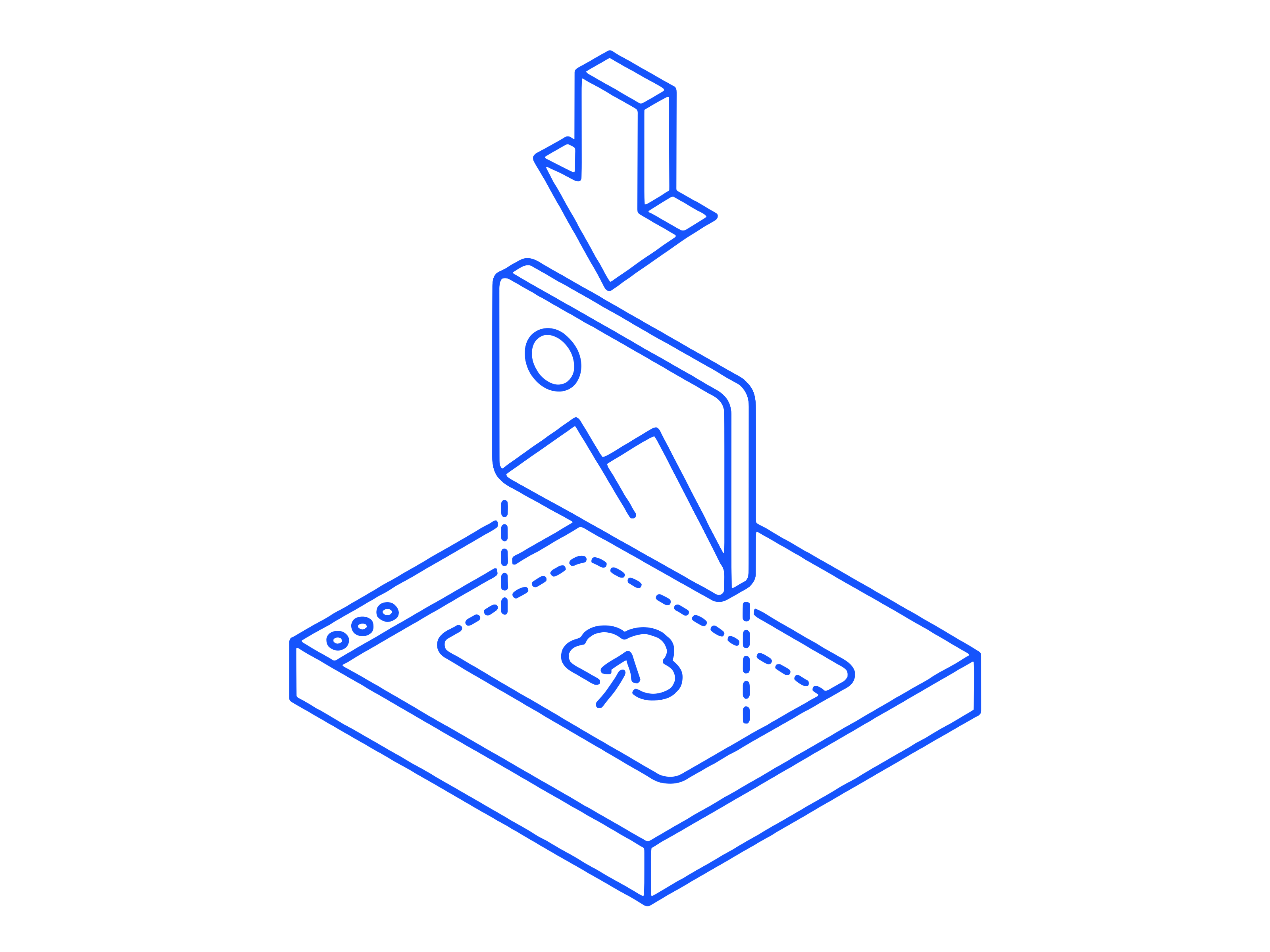
1. Upload Artwork
Choose one PNG, JPEG, or WebP up to 4 MiB for vectorization. Start with the clearest source you have.
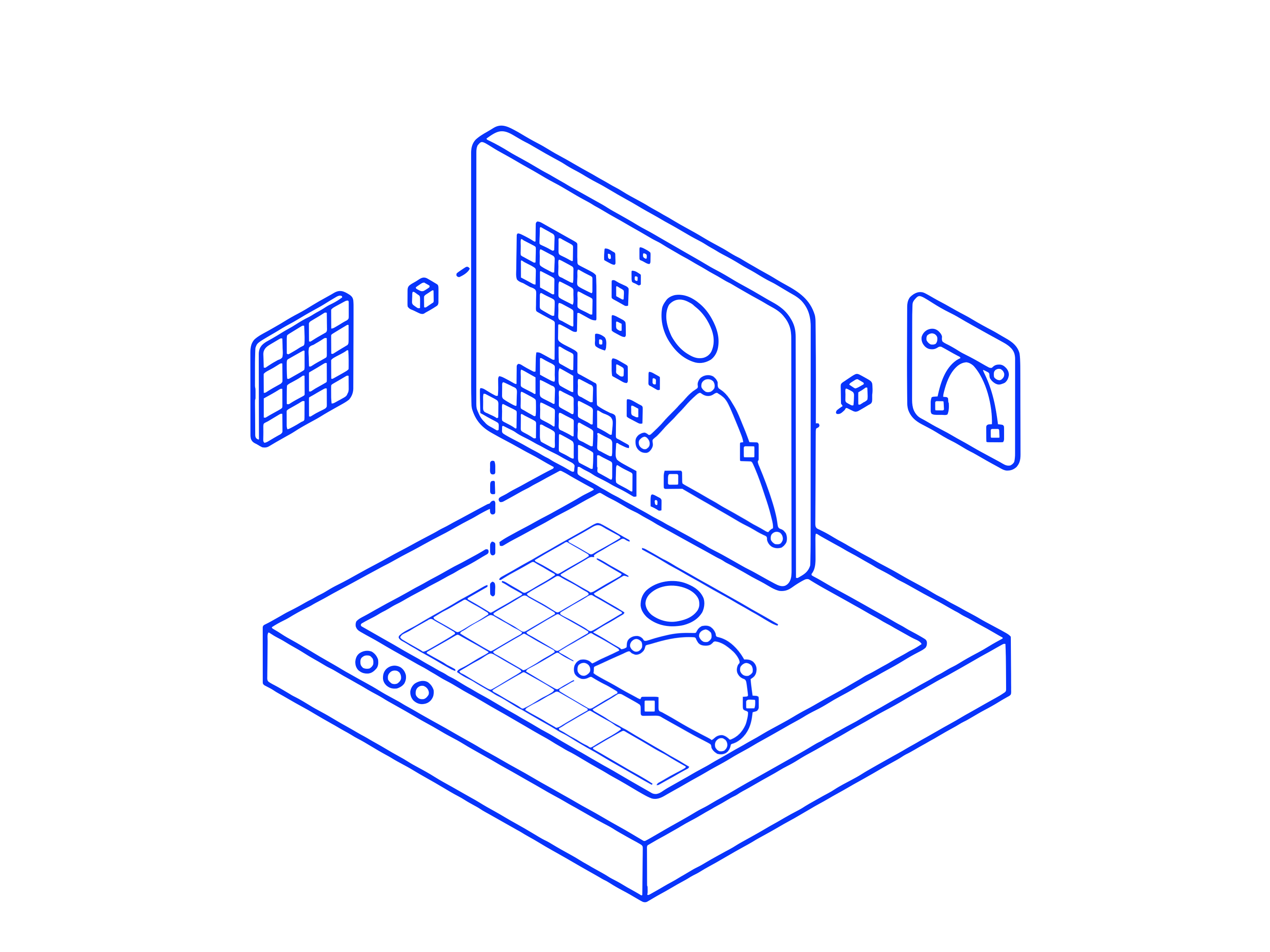
2. Reconstruct Geometry
Your image converts automatically. Compare the protected preview with your original, then choose authorized SVG export.
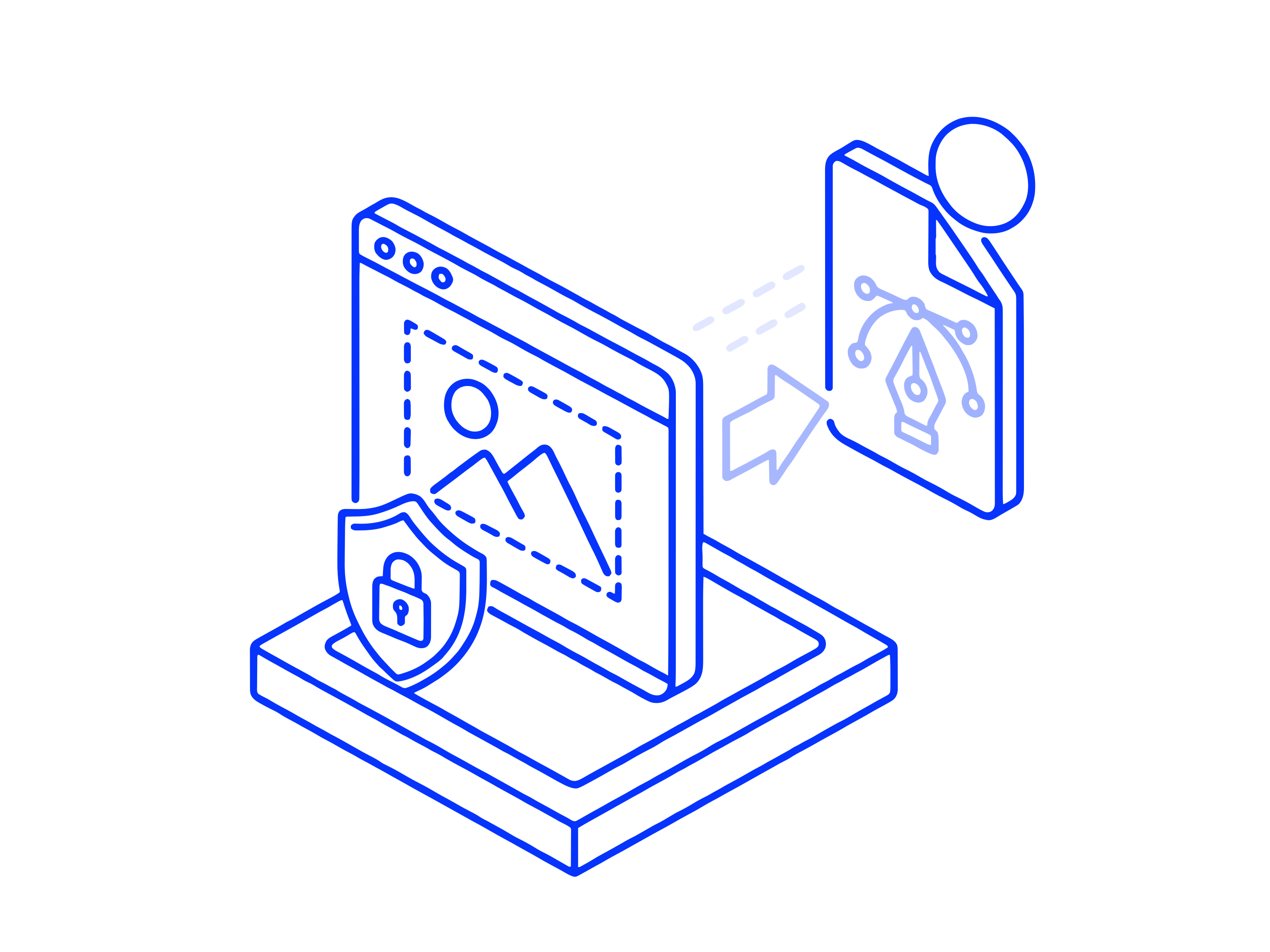
3. Review & Export
Inspect the preview, then request editable SVG export with paid or complimentary access. Check the exported file in your destination software.
Full Featured
The current vector workflow, from a supported source to an inspected, editable file.
Supported raster input
Start with one PNG, JPEG, or WebP up to 4 MiB. Clear edges and distinct color regions give you a more useful source to inspect.
Protected inspection
Create and inspect a protected raster preview without an account. Compare the result with your original before choosing export.
Authorized editable geometry
Editable SVG export requires paid or complimentary access and successful authorization. A preview alone does not deliver the vector file.
Source-fidelity review
Compare silhouettes, curves, colors and small lettering. Tracing cannot recover missing source detail or guarantee an identical result.
Negative-space review
Inspect holes, counters, narrow gaps and unwanted joins. Check the exported paths as well as the overall appearance.
Downstream editability
Open the authorized SVG in your vector editor to refine paths and scale. Print, cutting and other production uses need their own compatibility and setup checks.
What You Can Use This For
Logo Conversion
Preview supported logos with our vectorization engine, then authorize SVG export.
Print & Merch
Review authorized SVG in downstream production software.
Web & UI Design
Review authorized SVG before using it in a website or interface.
Favicon Generation
Use the dedicated favicon workflow for supported assets.
Prepare an image and inspect the result
Raster images store a fixed pixel grid, while SVG stores editable geometry. PNG is often useful for flat artwork and transparency, JPEG can carry compression artifacts, and WebP may combine compression with transparency. Those source differences affect what should be inspected after tracing.
Vectorize Image accepts PNG, JPEG, or WebP for the protected preview workflow. The browser receives a raster preview and opaque short-lived reference rather than raw SVG. Editable SVG download requires paid or complimentary authorization.
After authorized download, compare the SVG with the source at relevant sizes. Check canvas dimensions, color regions, closed contours, holes, small fragments, and path complexity before using the file in a design, print, or machine-oriented downstream workflow.
Supported inputs and export-first cases
| Source | Preparation |
|---|---|
| PNG, JPEG/JPG, WebP | Accepted directly up to 4 MiB, subject to decoded-image limits. JPEG and JPG are the same encoding. PNG and WebP may contain transparency; inspect the actual alpha and edge pixels. |
| BMP or TIFF | Export a copy to PNG, JPEG or WebP in suitable local software. Format names do not establish compression mode, edge fidelity or tracing quality. |
| HEIC or an iPhone capture | Export to a supported raster first. Crop distractions and use a straight-on, evenly lit source. Changing future camera settings does not convert existing files; do not assume AirDrop always changes the encoding. |
| GIF or animation | Choose and extract the intended still frame in another application, then export it to a supported format. This tool does not upload GIF or convert an animation. |
| Existing SVG, AI, EPS or PDF | Preserve existing editable artwork in a suitable editor first. A PDF can be a scan or contain native objects. Only export pixels for tracing when reconstruction is actually needed. |
Changing format does not restore an original logo master. An SVG can also embed raster images; inspect actual paths after authorized export. Photographs may be better retained as pixels, while flat logos and line art can be useful candidates for inspected path reconstruction.
JPEG preparation and comparison
JPEG stores compressed raster pixels, while tracing interprets visible boundaries and color regions as vector paths. Compression artifacts that are visible in the source may also influence the traced geometry.
Flat artwork with distinct edges and color regions is usually easier to evaluate as paths. Photographs contain continuous tones and dense detail, so their traces may be simplified or stylized rather than photorealistic; every result remains source-dependent.
Before upload, inspect the crop, resolution, contrast, background, and visible compression artifacts. Upscaling may be tried only as an optional source-preparation experiment: compare the original and upscaled previews, and keep the version whose inspected result better serves the intended use rather than assuming upscaling improves vectorization.
Use the access workflow in order: upload the accepted JPEG to create a protected preview, review that preview against the source, then obtain editable SVG only through paid or complimentary authorization.
Inspect the traced edges, stray fragments, color regions, and negative space before downstream use. Output may require editing or another source-preparation attempt, and no fidelity or performance result is guaranteed.
PNG transparency does not guarantee background-free geometry, and WebP needs no intermediate JPEG conversion for this workflow. A transparent source can still have colored edge pixels or an unwanted painted region. Do not repeatedly re-encode a damaged source in the hope of recovering detail.
Judge fidelity separately from scalability
PNG, JPEG, and WebP sources store colored pixels on a fixed grid, while SVG represents traced shapes as paths. Paths can scale without exposing a pixel grid, but that format property does not prove the trace faithfully reproduces the source.
Start with the highest-quality accepted source available. Resolution, contrast, edge definition, compression, texture, and small detail affect what a tracer can infer; missing or blurred source information cannot be restored merely by changing formats.
- Check edges for breaks, merging, or stray fragments.
- Compare curve shape and line continuity.
- Review color regions for unwanted joins or splits.
- Check holes, counters, and other negative space.
- Review the overall silhouette and then small lettering, serifs and intentional gaps at the intended display size.
Vectorization does not guarantee identical output, lossless conversion, or source fidelity. Obtain editable SVG only through paid or complimentary authorization, then review the geometry and its downstream behavior in the intended application.
Written inspection examples
These are diagnostic scenarios, not observed trace outputs. For a flat badge, compare the outer silhouette and separate color regions. For line art, look for broken lines, doubled outlines and unintended joins. For a tonal photograph, decide whether simplified regions serve the intended style; extra paths do not by themselves mean better fidelity.
If small letters lose counters or serifs, use a better original or recreate the lettering in an editor with the correct licensed font. Tracing is not OCR and does not recover original text or layers. Reducing path complexity can remove meaningful detail; adding complexity can make editing harder. The protected workflow does not expose color-count, smoothing or simplification controls.
Preparation can remove real detail
In our owned September 8, 2026 background-removal test, a pale 8 × 8 square was erased from a blue ring. This is a preparation failure example, not a vectorization before-and-after or a fidelity score. Keep the original and inspect pale regions before tracing the prepared image.


Compare the original and any enlarged source before choosing what to trace. Raster enlargement interpolates existing pixels and does not restore lost detail. After authorization, editing a path can improve a specific shape, but does not prove recovery of the original master.
Download and inspect the same stored result
- Choose the clearest owned PNG source available and confirm that it is within the published upload and decoded-image limits.
- Upload the PNG to create the protected preview; no account is required to create or view that preview.
- Inspect the raster preview for missing detail, altered negative space, unwanted background regions, and obvious tracing artifacts.
- Use the visible SVG download action when ready. Anonymous and signed-in Free users go directly to pricing.
- After paid or complimentary authorization, download the stored SVG and inspect its paths, dimensions, colors, and downstream compatibility in an appropriate editor.
A protected preview is raster, not an editable SVG. If the download is denied, review pricing and complete authorization; denial is not an export. If a result expires, create and inspect a new preview rather than assuming an old reference remains usable.
Choose the final placement size
Illustrative arithmetic: a 600-pixel-wide raster at 3 inches has 200 pixels per inch; at 6 inches it has 100. A requested 4-inch placement at 250 pixels per inch needs 1000 output pixels, but those numbers are an example, not a universal print requirement. Existing vectors can be rendered at a chosen size; raster downsampling or an adequately sized original may already meet the job. Tiny icons may need an approved simplified mark even when paths scale.
Choose the next task
Use the workflow that matches the source problem or receiving application.
Choose a format workflow
Preserve an existing master or prepare a separate export.
Choose a receiving workflow
Find print, cutting, brand and screen preparation.
Inspect background removal
Review alpha, crop and the owned pale-detail failure.
Resize a raster
Choose dimensions or format without assuming detail recovery.
Diagnose a distorted SVG
Inspect the geometry after authorized download.
Prepare website assets
Choose web representations and inspect the fixed bundle.
Frequently Asked Questions
What formats do you support?
Supported inputs vary by tool, but common uploads include PNG, JPG, JPEG, WEBP, BMP, TIFF, and SVG. Common outputs include SVG, PNG, JPG, WEBP, and downloadable ZIP packages for some tools.
What is free?
For vectorization, you can create and view one protected preview without an account. Editable SVG export requires paid or complimentary access. Other tools may have their own clearly displayed limits.
Who owns the output?
You may use generated outputs, subject to your rights in the original file and any third-party rights that apply. Vectorize Image does not clear trademarks, copyrights, font licenses, or other rights for you.
Why should I review vector output before production use?
Vectorization and conversion quality depends on the source file. Review paths, colors, transparency, scale, file compatibility, and production requirements before using outputs for printing, cutting, embroidery, manufacturing, or brand delivery.
Vectorize Your Image Now
Create a protected preview without an account. Editable SVG export requires paid or complimentary access.